Loading...
Serving Mount Pleasant, SC and surrounding areas. (854) 858-0208
Coastal humidity and long summers demand more than standard insulation. Closed-cell foam blocks heat, seals air leaks, and resists moisture - all in one application that lasts the life of your home.
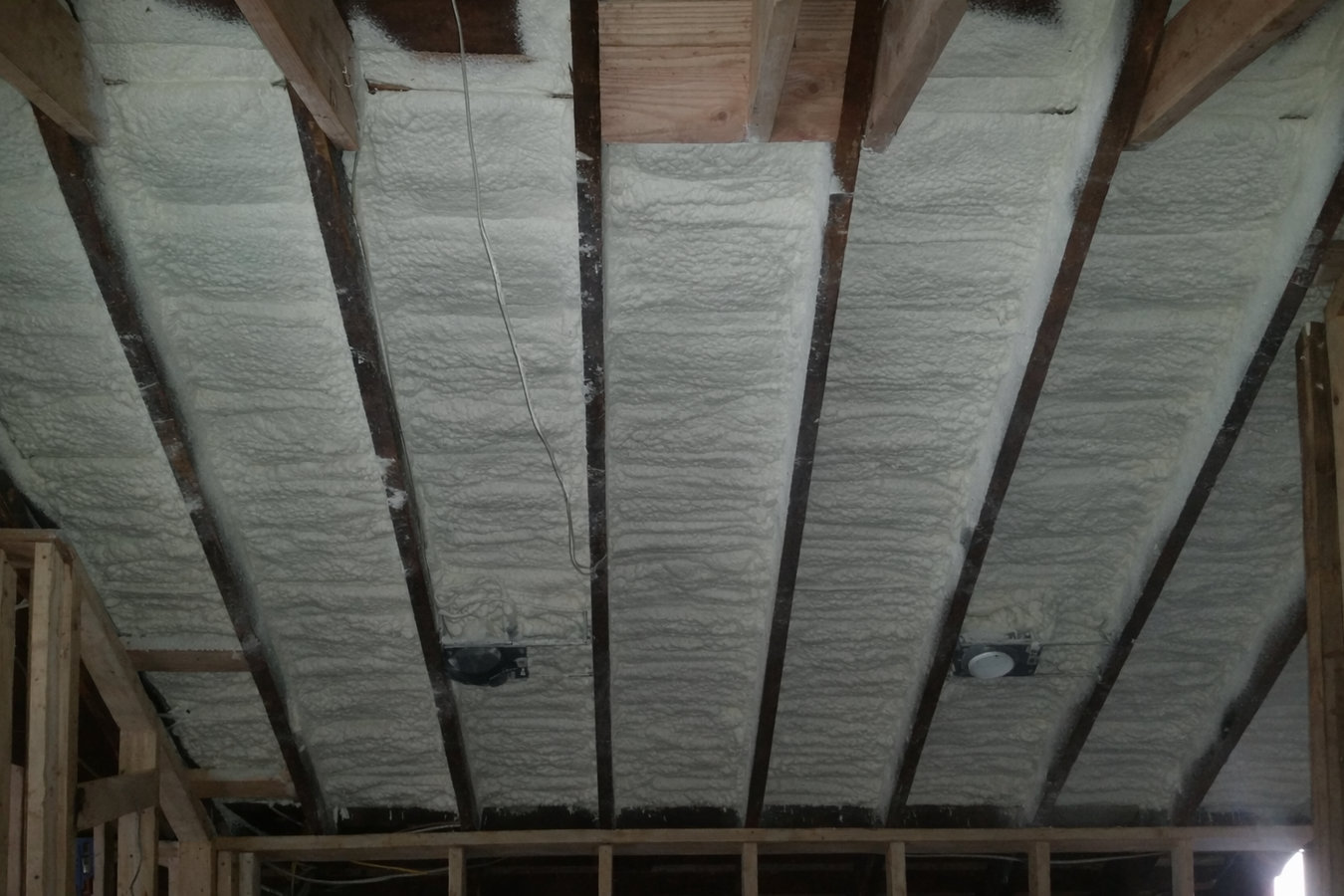
Closed-cell foam insulation in Mount Pleasant is a two-part liquid sprayed onto surfaces that expands and hardens into a dense, rigid layer - it insulates, seals air gaps, and blocks moisture simultaneously, and most residential jobs covering an attic or crawl space are completed in one to two days.
What sets it apart in the Lowcountry is the moisture resistance. Standard fiberglass batts slow heat transfer but do nothing to stop humid air from moving through wall cavities and crawl spaces. Closed-cell foam has very low vapor permeability, which means it acts as both an insulator and a moisture barrier. In a climate where summer humidity routinely pushes above 80 percent, that combination is what makes the difference between insulation that performs for decades and insulation that fails within a few years.
If you are weighing options, it helps to understand where each foam type works best. Our page on open-cell foam insulation covers the lighter, more affordable alternative that suits interior walls and attics where moisture is not a concern. Many homes use both - closed-cell where moisture is present and open-cell where it is not.
If your air conditioner runs almost nonstop during a Mount Pleasant summer but certain rooms still feel stuffy or warmer than the thermostat setting, hot humid air is finding its way in through gaps in the building envelope. This is one of the most common complaints in older Mount Pleasant neighborhoods, and it is exactly the kind of problem closed-cell foam addresses by sealing those gaps completely.
A musty odor drifting up from the floors - especially in the morning or after rain - is a sign that the crawl space is holding moisture. In Mount Pleasant's climate, an unsealed crawl space pulls in outside air and lets it condense on wood framing and subfloors. Left untreated, this leads to mold growth and wood damage that is far more expensive to fix than the original insulation job.
If your electricity bill jumps significantly from May through September - beyond what you would expect from normal AC use - your home may be losing conditioned air faster than it should. A properly sealed home holds its temperature much more efficiently. Comparing your bills to prior years during the same months is a reliable way to spot whether the problem is getting worse.
Homes built in the 1970s, 1980s, and 1990s in Mount Pleasant - in neighborhoods like Snee Farm, Hobcaw, or the Old Village - were insulated to standards that are well below what is recommended today. Decades of South Carolina heat and humidity degrade original fiberglass batts. If you have never had an energy audit or insulation inspection on a home older than 25 years, there is a strong chance it is underperforming.
We apply closed-cell foam in the areas where it makes the biggest difference for homes in this climate - attics, crawl spaces, exterior walls, and the rim joist at the top of the foundation wall. Each of these locations is an entry point for the humid Lowcountry air that drives up energy costs and creates moisture problems. Our full spray foam insulation service covers both closed-cell and open-cell options depending on where each type is needed in the home.
For homes where the crawl space is the primary problem - musty smells, soft floors, or visible moisture on framing - closed-cell foam applied to the crawl space walls and subfloor is often the single most impactful upgrade available. It creates a sealed, conditioned environment that protects the structure beneath your home. For homeowners dealing with both crawl space and wall issues, we can pair this work with open-cell foam in interior walls to address sound control and comfort at the same time.
The top choice for homes in the Lowcountry - seals out humid outside air, protects wood framing, and eliminates the musty odors that come from an unprotected crawl space.
Applied to the underside of roof decking or attic floor, blocking the intense heat and humidity that builds up in an uninsulated attic during a Mount Pleasant summer.
Ideal for homes where exterior walls have little or no insulation - common in older construction from the 1970s through 1990s in established Mount Pleasant neighborhoods.
One of the most cost-effective applications - sealing the rim joist with closed-cell foam eliminates a major air leak at the foundation-to-framing transition that is easy to overlook.
Mount Pleasant sits in one of the most demanding climates in the country for insulation - year-round heat and humidity, a long cooling season, and an active hurricane corridor from June through November. Closed-cell foam is the only common insulation material that addresses all three of these pressures at once. It blocks heat gain, resists moisture infiltration, and - because it bonds rigidly to framing members - adds measurable stiffness to wall assemblies that helps homes hold together better under wind pressure. For homeowners in elevated neighborhoods near the water, that structural benefit is a meaningful bonus on top of the energy savings.
A large share of homes in Charleston and Mount Pleasant were built during the rapid growth of the 1990s and early 2000s, when insulation standards were significantly lower than they are today. Homes in that age range have had decades of coastal humidity working against their original insulation - and upgrading to closed-cell foam in the attic and crawl space typically produces the most dramatic improvement because the gap between the existing performance and what is possible is so large. The Spray Polyurethane Foam Alliance and the U.S. Department of Energy both provide guidance on closed-cell foam applications and installation standards for homeowners who want to research further.
We will ask which areas you want treated and whether you have noticed any moisture or comfort issues. Because local contractors stay busy - especially in spring and fall - we recommend scheduling your estimate a week or two out. You will hear back within one business day.
We walk the attic, crawl space, or walls being treated, check for existing insulation or moisture problems, and give you a written estimate with a clear scope and cost breakdown. No obligation - take time to compare with other quotes.
Clear the work area of stored items. Plan for you, your family, and pets to be out of the home on installation day and for at least 24 hours after. Your contractor will give you a specific checklist so there are no surprises the morning of the job.
The crew applies foam in passes, building up to the required thickness. Most residential jobs finish in a single day. After your re-entry window, open windows and run fans briefly - any residual odor clears quickly once the space gets fresh air.
We assess your attic or crawl space in person and give you a written quote before any work begins - no pressure, no obligation.
(854) 858-0208Thin spots in foam application are invisible to the eye but show up as cold zones and wasted money over time. We check coverage thickness after every installation so you know the work was done to the standard we quoted - not just to whatever the crew decided was close enough.
The combination of heat, humidity, and storm exposure in Mount Pleasant requires different material choices and installation techniques than a dry inland market. We work in this climate every day and recommend accordingly - not the same approach that might be right for a home in Columbia or Charlotte.
Every job meets current South Carolina building and energy code requirements, and we document what was installed and where. That written record protects you at resale and gives you clear proof of the work in your home.
Some closed-cell foam projects - particularly crawl space encapsulation and significant building envelope changes - require a permit from the Town of Mount Pleasant. We handle the application and coordinate any required inspections so you do not have to manage that process yourself.
Closed-cell foam is a long-term investment in your home - the kind of work that should be done once and done right. Every job we do is backed by our commitment to verify coverage and stand behind the work after the crew leaves.
A lighter, more affordable foam option suited for interior walls and attic interiors where moisture exposure is low.
Learn MoreFull spray foam insulation services covering both closed-cell and open-cell applications across attics, crawl spaces, and walls.
Learn MoreSpring slots fill fast in Mount Pleasant - schedule your free estimate now and have your home sealed before peak cooling season.